
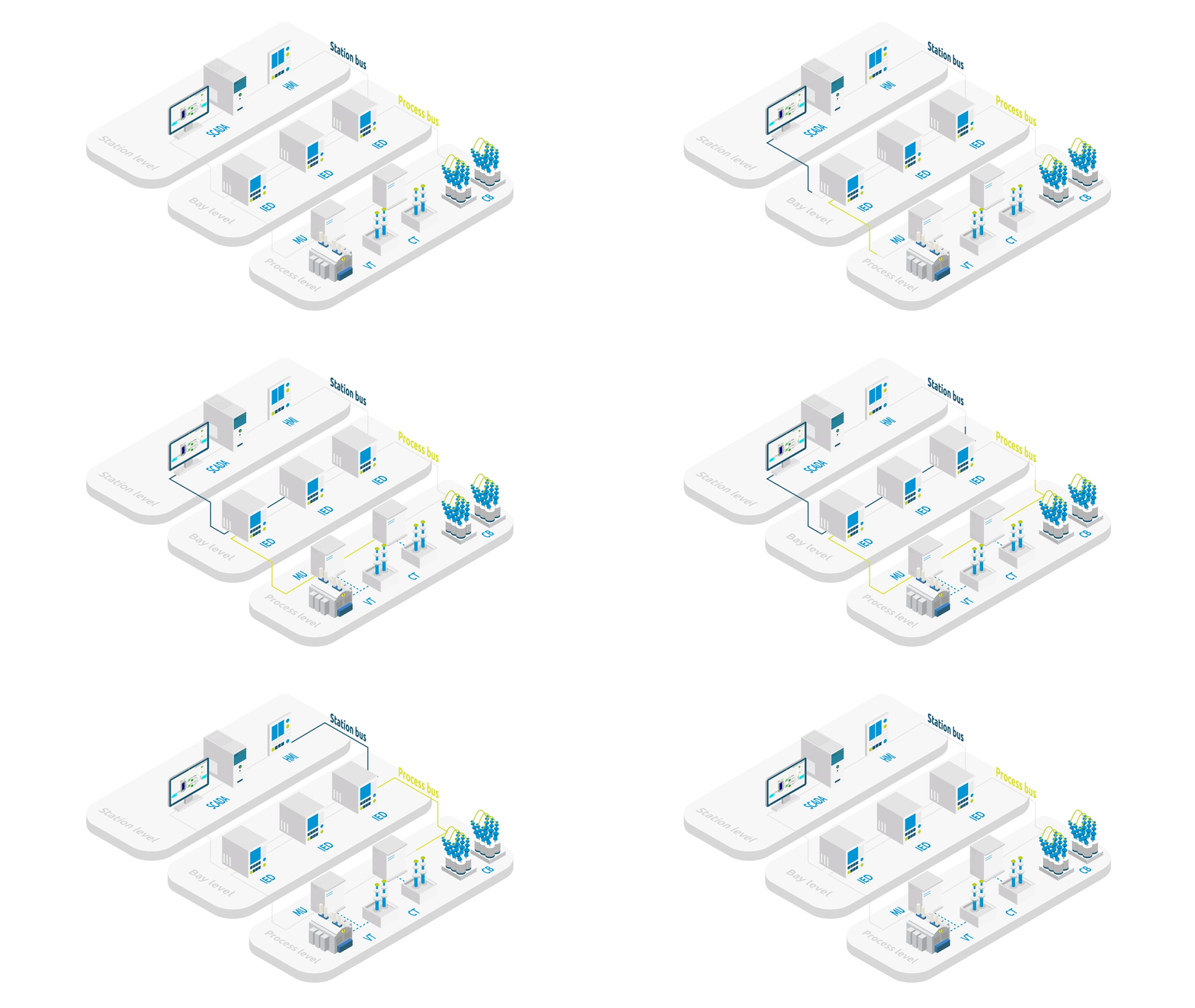
What is IEC61850?
IEC61850 is a communication standard used in the automation of electrical substations. In simple terms, IEC61850 allows different devices and systems to communicate with each other effectively.
Definition of the IEC61850 standard
The IEC61850 standard was developed to improve communication in electrical systems. Its main objective is to facilitate the integration of different equipment and technologies in substations. This includes everything from switches to control systems. In essence, a common language IEC61850 established so that all these devices can "talk" to each other.
Key objectives and benefits
- Interoperability: It allows teams from different manufacturers to work together seamlessly.
- Flexibility: It facilitates adaptation to new technologies and systems.
- Cost reduction: By standardizing communication, integration and maintenance expenses are reduced.
- Improved efficiency: Fast and effective communication between devices optimizes the operation of substations.
These benefits are essential in the modern era, where efficiency and cost reduction are more important than ever.
Comparison with other communication protocols
While there are other communication protocols in the electrical industry, such as DNP3 or Modbus, IEC61850 stands out for its focus on interoperability. Unlike these protocols, which are often manufacturer-specific, IEC61850 allows different devices from multiple vendors to integrate seamlessly.
Fundamentals of IEC61850
The basics of IEC61850 They are essential for understanding how devices communicate in electrical substations. This standard was designed to maximize interoperability and efficiency in communication. But what does this really mean? Let's break it down.
1. Protocol Design Principles
The design of the IEC61850 protocol is based on several key principles:
- Interoperability: It allows different devices from different manufacturers to communicate seamlessly.
- Flexibility: Adapts to various system architectures.
- Scalability: It can grow with the needs of the electrical infrastructure.
These principles are critical to creating a robust and efficient system.
2. Data structure in IEC61850
The Data structure in IEC61850 it is unique. It uses an object-oriented approach. This means that the data is organized into objects that represent device-specific functions. For example, a transformer may have an object that represents its state and another that shows its performance.
This organization facilitates the understanding and management of information. Instead of dealing with scattered data, you can access everything you need through a single object. It's like having a well-organized closet!
3. Information exchange functions
Information exchange functions are crucial for the operation of substations. IEC61850 allows:
- Monitoring: Monitor device status in real-time.
- Control: Send commands to devices to perform specific actions.
- Protection: Respond quickly to system failures.
These features ensure that the system operates efficiently and safely. Can you imagine an electrical system without monitoring? It would be chaos.
4. Types of Services Provided
IEC61850 provides several types of services that facilitate communication:
- Data Services: To access and manipulate data from devices.
- Control Services: To send commands to devices.
- Protection Services: To handle failure events.
These services are the backbone of communication in substations. Without them, coordination between devices would be nearly impossible.
5. Technical aspects: GOOSE, MMS and SV
At the heart of IEC61850 are several important technical aspects:
- GOOSE (Generic Object Oriented Substation Event): It is essential for real-time communication. It allows for the rapid exchange of information between devices.
- MMS (Manufacturing Message Specification): It is used for client-server communication. It is ideal for operations that require more complex data exchange.
- SV (Sampled Values): It allows you to transmit sampled values quickly and efficiently.
These technical aspects are what make IEC61850 so powerful.
At DAVANTEL we have solutions for the automation of electrical substations through the IEC61850 thanks to our partner KLG Smartec.

SICOM3000A

SICOM3024P

SICOM3024P-A – Switch gigabit industrial de 28 puertos en formato rack 19» con cumplimiento IEC61850

Ruby3A – RedBox PRP/HSR

SICOM3028GPT
