
What is AUTOBUS ?
AUTBUS is a communications bus for industrial environments that allows speeds of up to 100Mb/s over a pair of wires and supports bus or ring topologies of up to 254 multi-drop nodes with a maximum distance of 500m
AUTBUS' Broadband Bus technology is at the forefront of the industrial network, representing the world's first integration of real-time transmission and IPv6 technologies into a two-wire broadband bus system. This innovative international standard addresses the critical 'last mile' of global industrial control communication. Designed to meet the rigorous demands of smart manufacturing, AUTBUS offers unprecedented bandwidth and real-time communication capabilities. It symbolizes a fundamental breakthrough in the unification of communication protocols, paving the way for a new era in smart manufacturing and industrial efficiency.
IEC Standard
AUTBUS is standardized by the IEC and registered under IEC 61158 Type 28 and IEC 61784 CPF22.
The International Electrotechnical Commission (IEC) is a standards body that sets international standards for electrical, electronic and information technologies, in order to ensure safe, efficient and reliable operations.
AUTOBUS technology
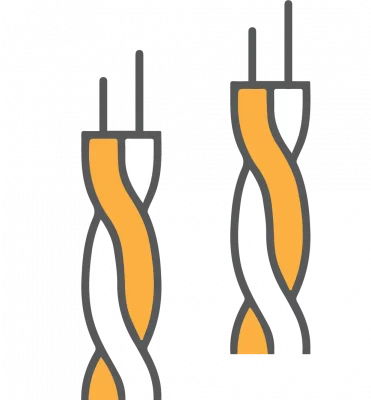
AUTBUS can be used with balanced cables, such as single-pair stranded cables, or with unbalanced cables, such as coaxial. With a qualified twisted-pair cable, up to 254 data network nodes can be reached in multi-drop configuration at a distance of up to 500 meters, with a transmission rate of 100 Mbit/s simultaneously.
At the physical layer, AUTBUS uses OFDM (Orthogonal Frequency Division Multiplexing) technology to adapt to severe channel conditions and narrowband co-channel interference, making AUTBUS an ideal solution for industrial communication technology in harsh environments. OFDM technology has been used in both wired and wireless communications. With its characteristics of high bandwidth, low latency and determination, AUTBUS is predestined for the field of industrial wired data communication. Mission-critical deterministic challenges exist in a variety of industrial applications, where AUTBUS can deliver great benefits.
Since AUTBUS uses a time-based framework to synchronize each node, you can easily achieve an accurate time synchronization result (less than 100 ns) without the need for complicated software protocols such as IEEE 1588.
Through AUTBUS-based multi-couplers such as the ABN300 from KLG Smartec, this technology supports data tunneling, which allows, for example, the transmission of Ethernet-based protocols, such as traditional Ethernet, PROFINET, EtherNet/IP, ModbusTCP, as well as other communication protocols such as CAN, UART and LIN/FR, from one data connection point to another via the multidrop data network, without the need to translate these protocols.
AUTBUS can transmit IPv4/IPv6 data while also enabling the transmission of time-sensitive and non-time-sensitive data as a virtual bus. It is an ideal solution for transmitting periodic data together with burst data on the same bus, without requiring complex synchronization and management protocols.
Benefits

Topologías de red
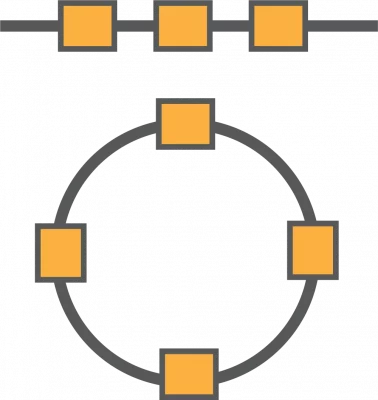
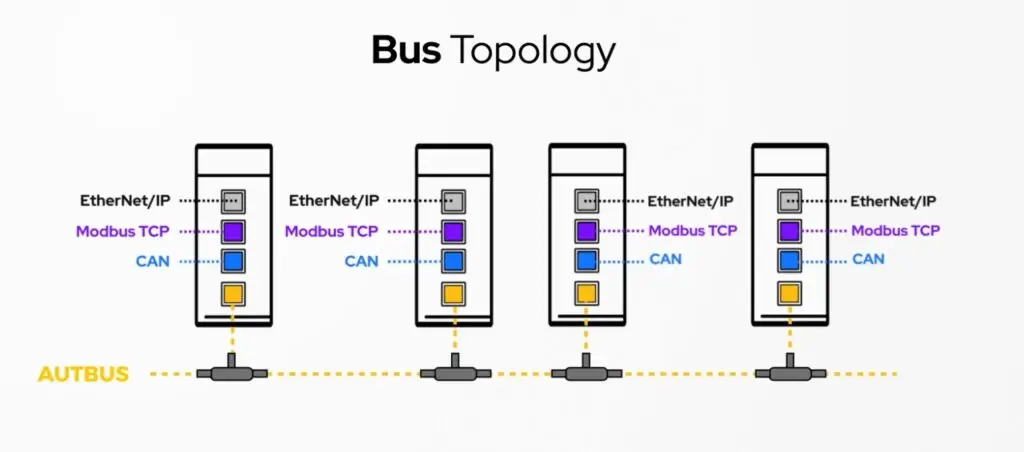
AUTBUS supports both bus network topology and ring topology, using a quality stranded cable or coaxial cable. Up to 254 data network nodes can be reached in Multi-drop over a distance of up to 500 meters, with a simultaneous transmission rate of 100 Mbit/s. A fully interconnected network was limited in this topology by using an individual cable that surrounds all the nodes. In a multi-drop topology, only one line is shared by all nodes. Whenever a network transmits a message, it keeps both the sender's address and the recipient's or receiver's address as labels. Each device has a specific address, and to access a particular node, a user only needs to know its address. The flow of traffic between the different devices in the network is relatively straightforward, since all stations can receive any transmission or a single station can send to all stations.
Bus topology
On-bus network topology is also known as horizontal topology and is very common among fieldbus networks. In this network, each device is connected to a single connection line or cable through an interface. Thus, each device can communicate directly with another computer or device on the network.
Advantages: The failure of any node does not affect the operation of the other connected devices. The incorporation of new nodes in the network is easily achievable. Controlling the flow of traffic is simple.
Disadvantages: If the communication line fails, the entire network is affected.
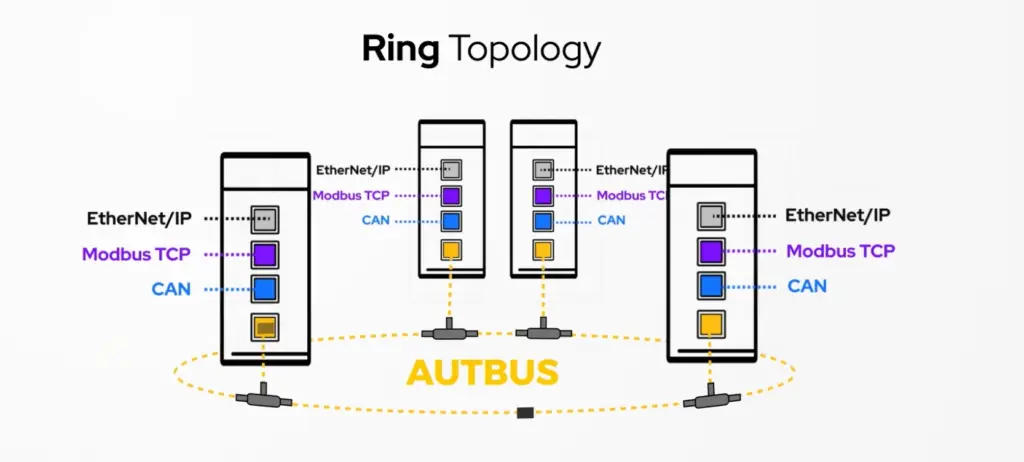
Ring Topology
A ring network topology consists of multiple devices communicating in a closed loop through a single means of communication. The information travels through the ring to each station until it reaches the desired device.
Advantages: It is a truly distributed data processing system. If one station fails in the network or a channel between two fails, alternative routing is possible.
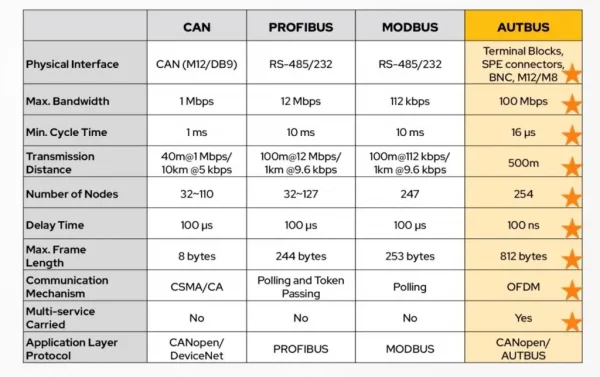
AUTOBUS vs other fieldbuses
AUTBUS presents improvements in all aspects compared to other fieldbuses on the market such as CAN, Profibus or Modbus.
Let us explain it to you

Application Scenarios
AUTOBUS can be applied in a wide variety of environments and applications. Here are some of them.
Industrial Automation
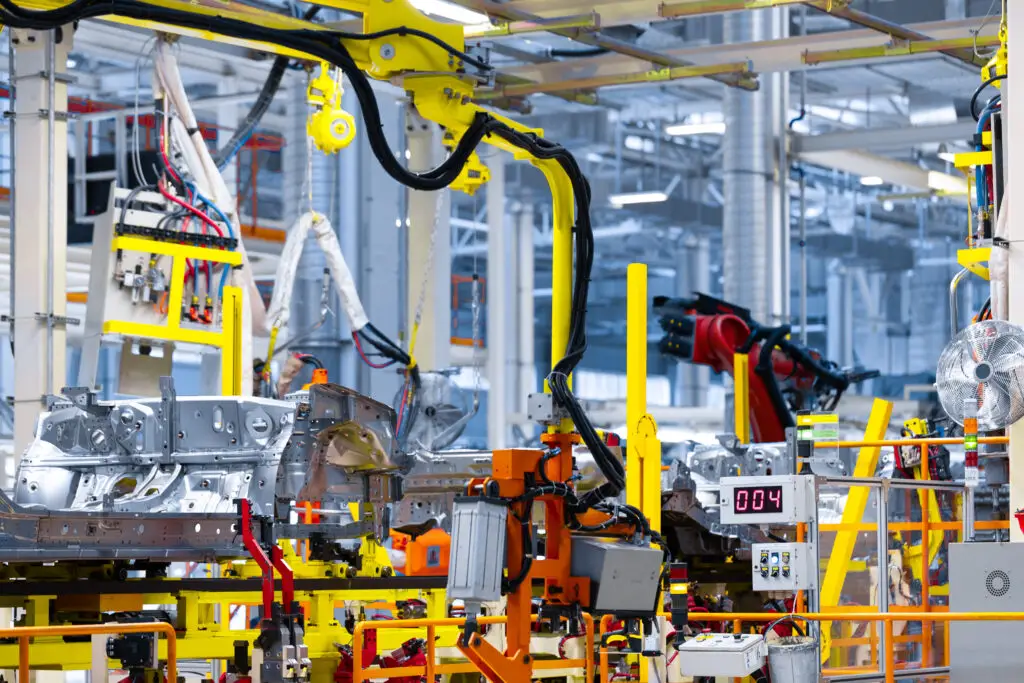
Typical applications of the AUTOBUS, with its multi-drop data network technology, can be found in industrial automation, public transport, building automation, traffic control systems and also in charging station parks for electric vehicles.
AUTBUS technology can be integrated into industrial control systems, remote I/O, sensors and actuators, taking over tasks from existing fieldbuses. Its technology can be incorporated into various automation systems. Thanks to the possibility of using AUTBUS for data tunnels, such as Ethernet-based transmission protocols such as ProfiNet, EtherNet/IP or ModbusTCP, existing fieldbus installations can still be used.
Electric Vehicle Charging
Electric Vehicle (EV) Multi-Charging Stations: With the increasing spread of electromobility, the number of EV charging stations in public spaces is also increasing. This requires not only power charging lines, but also wireless or wired communication, e.g. for access control during charging, billing or remote maintenance. In this respect, the AUTBUS multidrop solution is ideal for the simple networking of charging stations, for future expansions and also for connecting additional devices to the charging station as required.

Parking Management
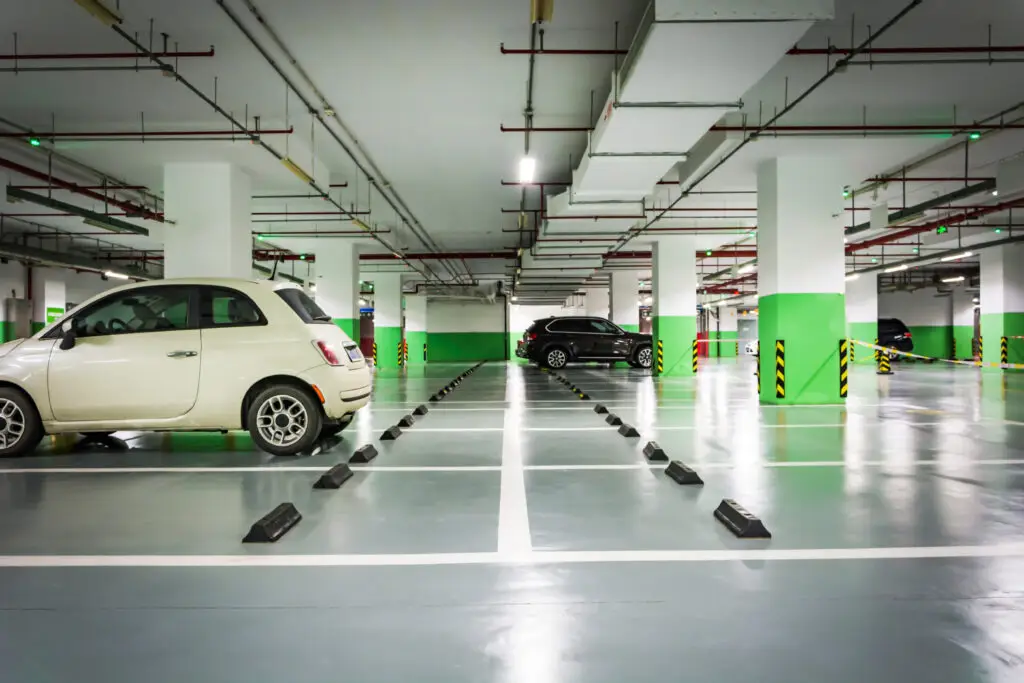
Paid car parks usually have entry and exit stations with barriers, payment terminals and video cameras. The most modern car parks also have sensors that detect occupancy and signalling systems for traffic management. In the future, services such as parking reservations through apps and cashless parking fee payments, among others, will be offered. Existing parking areas can be retrofitted with an AUTBUS Multidrop solution, allowing for easy connection of devices such as video cameras, parking sensors and reservation systems.
Smart buildings
In smart buildings, there are numerous areas of application for the multidrop solution based on a single pair. In today's digital ceiling solutions, for example, AUTOBUS can be placed directly at the device's exit point. The AUTBUS multidrop with a data rate of 100 Mbit is particularly suitable in situations where applications are arranged at regular intervals. For example, the blind controls on a window façade are predestined for the use of AUTBUS multidrop.

Railway
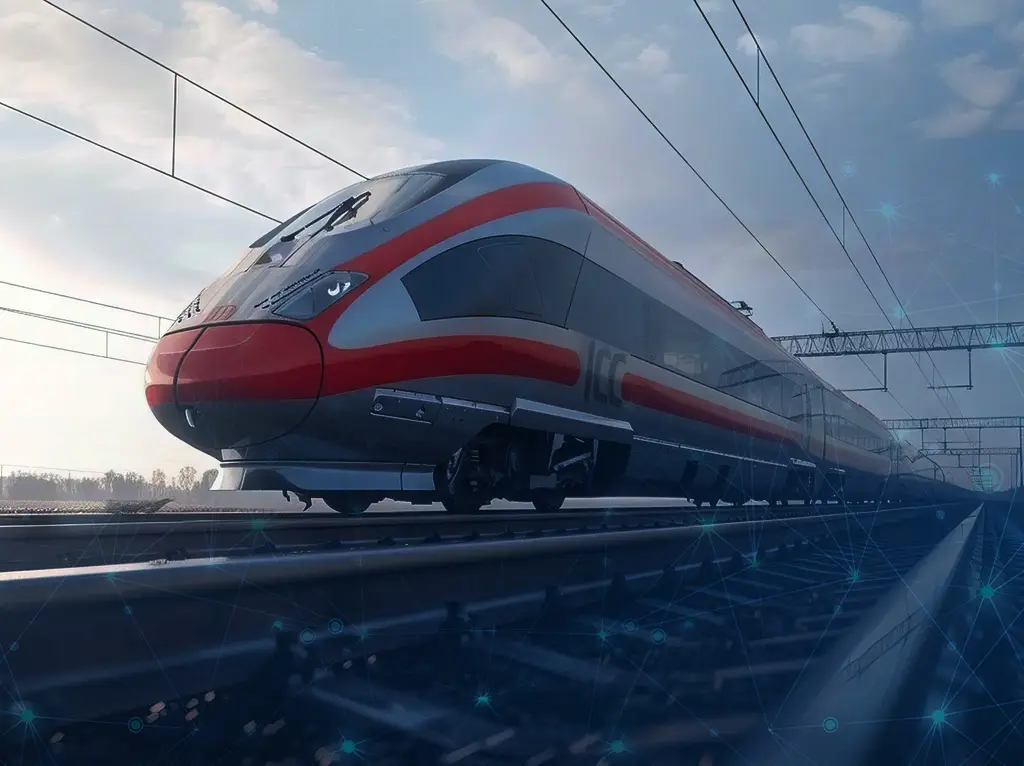
AUTOBUS is predestined for industrial wired data communication. AUTBUS is an ideal solution for communication technology in demanding environments, such as railway applications. It also supports real-time condition monitoring and predictive maintenance, reducing downtime and maintenance costs, as well as total wiring, extending the life of railway assets. This integration leads to an improvement in safety, reliability and operational efficiency, making AUTBUS a key technology for the modernisation of railway systems.
Related articles

AUTBUS como solución para el ahorro de cableado y aumento de fiabilidad en instalaciones de cargadores eléctricos en parkings
AUTBUS presenta múltiples ventajas en el cableado de comunicaciones para cargadores eléctricos en parkings frente a Ethernet incluyendo un menor ...

AUTBUS como solución para el ahorro de cableado y aumento de fiabilidad en plantas solares fotovoltaicas
AUTBUS presenta múltiples ventajas en el cableado de comunicaciones para plantas solares frente a Ethernet y RS485 incluyendo un menor ...

Solución para la supervisión de estaciones de transmisión de Petróleo y Gas basada en AUTBUS
TL;DR: El bus de campo AUTBUS simplifica el cableado reduciendo los costes y aumentando la facilidad de expansión de las ...
Are you missing any information?
If you still have any questions, fill out the following form and we will answer you as soon as possible.

